Confined Space Entry and Authorized Gas Testing: Why Atmospheric Testing Saves Lives
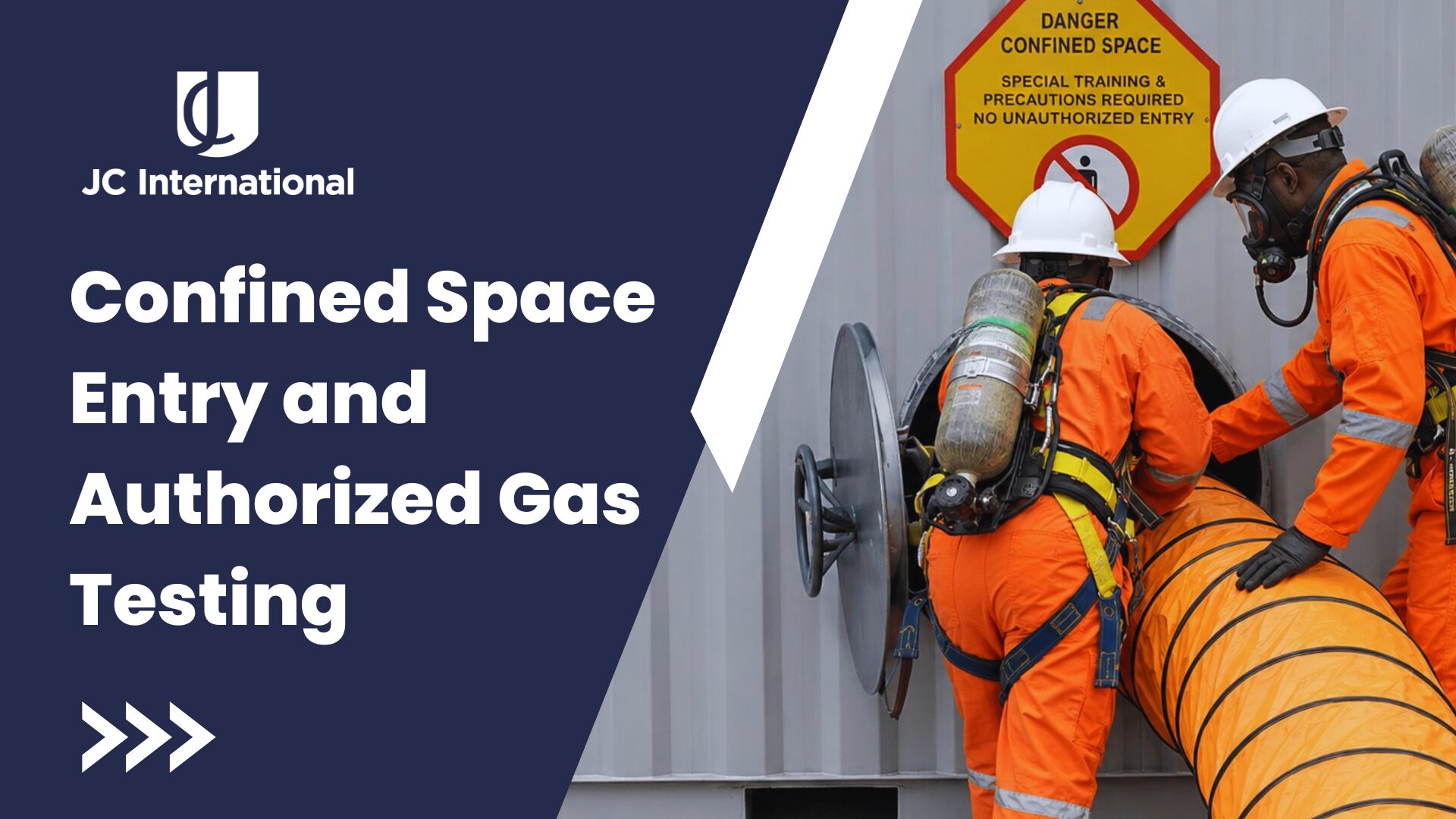
Confined spaces are among the most hazardous work environments across the oil and gas, marine, construction, manufacturing, and industrial sectors. Every confined space entry introduces risks that cannot always be seen or detected by human senses. This is why Authorized Gas Testing (AGT) plays a critical role in preventing accidents and protecting lives.
What Is a Confined Space?
A confined space is an enclosed or partially enclosed area that is not designed for continuous occupancy but is large enough for a worker to enter and perform assigned tasks.
Examples include:
- Storage tanks
- Pressure vessels
- Silos
- Pipelines
- Sewers
- Underground chambers
- Process vessels
These environments may contain atmospheric hazards that develop rapidly without warning.
Why Gas Testing Is Essential
Before any confined space entry, the atmosphere must be tested to determine whether it is safe for workers.
Gas testing helps identify:
- Oxygen deficiency
- Oxygen enrichment
- Toxic gases
- Flammable gases
- Explosive atmospheres
Without proper testing, workers may unknowingly enter a life-threatening environment.
The Danger of Hydrogen Sulphide (H₂S)
Hydrogen Sulphide is one of the most dangerous toxic gases encountered during confined space work.
It initially smells like rotten eggs.
However, prolonged exposure quickly removes the ability to smell it.
For this reason, relying on smell is extremely dangerous.
Only calibrated gas detection equipment can accurately determine whether H₂S is present.
Toxic Gases Every Gas Tester Should Know
Authorized Gas Testers monitor several hazardous gases, including:
- Carbon Monoxide (CO)
- Hydrogen Sulphide (H₂S)
- Methane (CH₄)
- Oxygen (O₂)
Each presents unique health and safety risks and requires appropriate monitoring procedures.
Understanding DSEAR Hazardous Zones
Hazardous areas are classified according to the likelihood of explosive atmospheres occurring.
- Zone 0: Explosive atmosphere present continuously.
- Zone 1: Explosive atmosphere likely during normal operation.
- Zone 2: Explosive atmosphere unlikely during normal operation and only exists briefly if it occurs.
Understanding these classifications helps organizations implement the correct safety controls and equipment selection.
What You’ll Learn During Confined Space & AGT Training
Participants develop practical competence in:
- Hazard identification
- Atmospheric gas monitoring
- Confined space entry procedures
- Permit-to-work systems
- Gas detector operation
- Emergency response procedures
- Hazardous area classification
- Safe isolation practices
Why Choose JC International?
JC International delivers practical, industry-focused Confined Space Entry and Authorized Gas Tester training designed for professionals working in high-risk environments.
Our experienced instructors combine classroom knowledge with hands-on practical sessions, ensuring delegates gain the confidence and competence required to work safely in confined spaces.
Invest in Safety Before the Next Entry
The most dangerous hazards are often invisible. Proper training, effective gas testing, and strict safety procedures remain the best defence against confined space incidents.
Train with JC International and develop the competence to recognize atmospheric hazards before they become emergencies.